1 min read
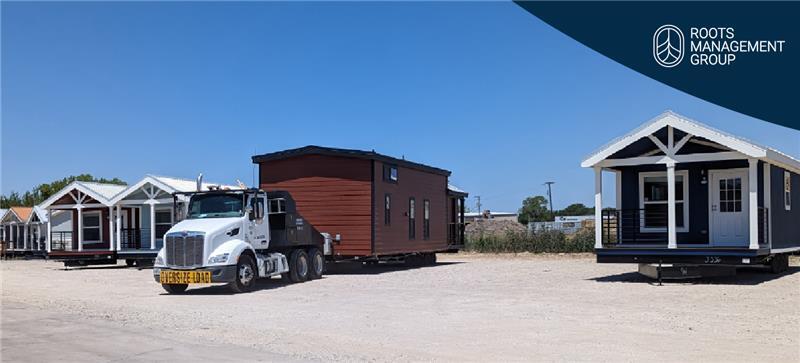
What Goes into Selecting the Homes That Build Our Communities
 Christine Bachman : Mar 13, 2026 3:15:01 PM



.png)
.png?width=1363&height=618&name=Main%20Banner%20-%20March%204%20(2).png)
This week marks an important moment for attainable housing in America. On Monday, March 2nd, the U.S. Senate advanced the Housing for the 21st Century Act, following its overwhelming passage in the U.S. House of Representatives on February 9th by a vote of 390–9.
This bipartisan legislation will modernize U.S. housing policy, reduce unnecessary regulation, expand housing supply, and improve access to homeownership, benefiting both the manufactured housing industry and the residents and communities served by Roots Management Group.
This bill represents a meaningful step toward making attainable housing more available, more modern, and more widely accepted.

“At Roots, our mission centers on providing quality attainable housing while building strong, connected communities,” said Tom Stapley, President of Roots Management Group. “This legislation recognizes manufactured housing as a modern, essential part of the solutions addressing today’s housing crisis.”
The Housing for the 21st Century Act is a bipartisan housing reform bill introduced in late 2025 with the goal of modernizing housing regulations, removing outdated barriers, increasing supply, and helping more Americans achieve homeownership.
The bill includes multiple provisions impacting federal housing programs, zoning, financing, and, most notably, manufactured housing.
Today, federal law requires every manufactured home to have a permanent steel chassis, even when that home will never move after installation. While this requirement made sense decades ago, it no longer reflects how modern manufactured homes are designed or used.
The bill proposes updating this definition so a manufactured home can be built with or without a permanent chassis.
Lower construction costs
Eliminating the mandatory chassis can reduce material and construction expenses, helping keep homes attainable.
Greater design flexibility
Manufacturers can build homes more like traditional site-built houses on slab foundations, crawlspaces, or even multi-story layouts.
More placement options
Homes that resemble site-built housing can fit more easily into a wider range of neighborhoods and zoning environments.
“This removes an outdated rule that has artificially limited design and driven up costs,” Stapley said. “It opens the door for homes that look and function like traditional housing, while still benefiting from the efficiency of factory-built construction.”
Importantly, this change also allows affordable housing communities to be located closer to major cities and towns' areas where jobs are more abundant, and transportation options are more accessible for families who may not own multiple cars. By removing barriers that previously pushed manufactured homes to remote locations, the legislation helps make attainable housing a practical option for more families, right where they need it most.
The bill also reaffirms the role of the U.S. Department of Housing and Urban Development (HUD) as the primary federal authority over manufactured housing construction and safety standards.
This clarification prevents overlapping or conflicting regulations from multiple agencies and preserves the long-standing HUD Code that has governed manufactured housing for more than 50 years.

“Strong national standards protect homeowners and support long-term community stability,” said Emilio Allen, SVP Capital Markets & Risk at Roots Management Group. “This bill ensures quality and safety remain non-negotiable, while allowing innovation and modernization.”
Under the legislation:
Another key element of the bill addresses financing challenges.
The legislation includes provisions aimed at expanding access to small-dollar FHA-insured mortgages. While not limited to manufactured housing, these changes could help buyers of lower-priced homes, including many manufactured homes, access safer, more affordable financing options.

“For many families, financing, not availability, is the biggest barrier to homeownership,” says Daniel Roacho, SVP of Sales, Inventory and Procurement at Roots Management Group. “Expanded home loan options make attainable housing truly attainable.”
At Roots Management Group, this legislation directly supports our mission to provide attainable housing while fostering strong communities.
The Housing for the 21st Century Act aligns with that mission by:
“Legislation like this recognizes what we see every day in our communities,” Stapley said. “Manufactured housing already helps families, retirees, and working Americans find a place to call home. This bill helps remove the barriers that have held this solution back.”
The bill has passed the U.S. House and now moves to the U.S. Senate, where a bipartisan housing package, including the same chassis reform provision, is under consideration.
If enacted, these changes would be phased over time and coordinated with HUD, lenders, and manufacturers.
For decades, manufactured housing has been one of the most effective paths to attainable homeownership. The Housing for the 21st Century Act signals a shift in how policymakers view this industry, not as a temporary solution, but as a modern, permanent part of the national housing strategy.
“This is more than a policy update,” Stapley said. “It’s recognition that attainable housing matters, and that manufactured housing is part of the answer.”
At Roots Management Group, we believe that strong communities start with stable, attainable homes.
Housing for the 21st Century Act is an important step toward making that vision a reality for more families across the country.
1 min read
Christine Bachman : Mar 13, 2026 3:15:01 PM

1 min read
Christine Bachman : Apr 22, 2025 12:12:03 PM

1 min read
Christine Bachman : Oct 6, 2025 4:20:25 PM